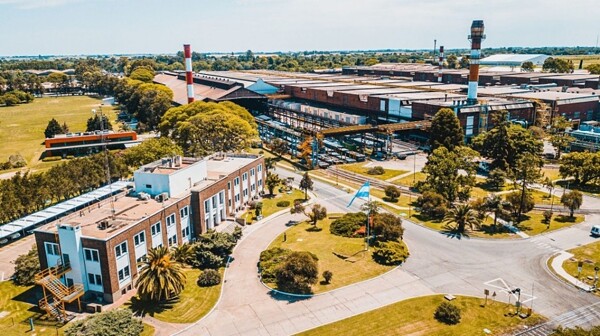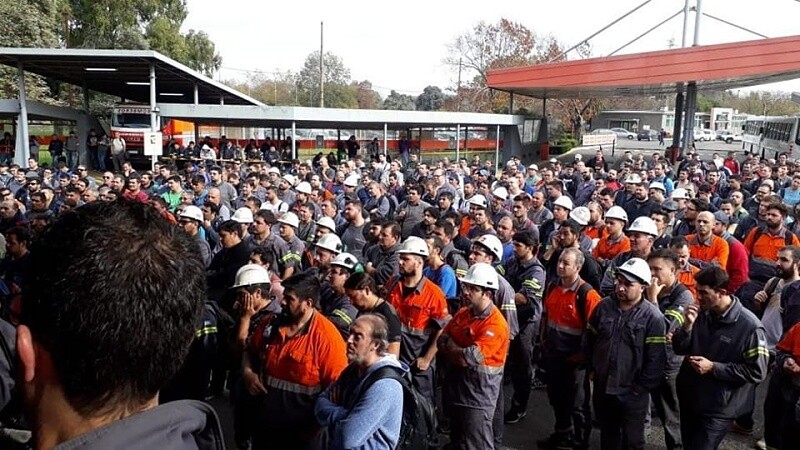
The entity emphasized that low domestic demand and the complete halt to national public works are deepening the steel crisis. The deterioration is not limited to production. Acindar and the UOM of Villa Constitución agreed to extend the rotational suspension scheme to 2026 due to the sharp drop in steel production, in a provincial and national context marked by company closures, job losses, and the impact of the public works freeze. In a context of falling industrial activity and the persistent crisis in the steel sector, Acindar and the UOM of Villa Constitución reached a consensus to extend the suspension mechanism applied in recent years until 2026, which aims to mitigate the labor impact of the significant production contraction. The understanding was formalized in a minute signed by both parties, which now must be approved by the provincial Ministry of Labor. A report from the Argentine Center for Political Economy (Cepa) revealed that since the beginning of the current government, more than 19,000 companies and 276,000 jobs have been lost nationwide, according to data from the Superintendence of Labor Risks (SRT). In Santa Fe, between November 2023 and August 2025, more than 2,000 employers disappeared and 15,657 registered jobs were lost. The Scalabrini Ortiz Center for Studies (Ceso) warned that the combination of a cheap dollar and import openness is accelerating deindustrialization, leading to company closures and job losses. For its coordinator, economist Andrés Asiaín, these consequences are not a side effect but a desired outcome of national economic policy, aimed at pressuring local business and hardening wage negotiation conditions, while promoting a reduction in labor costs. The scheme provides for an equitable rotation of suspensions and a proportional salary, which will decrease from 83% in the first months of the year to 75% in the last quarter. Acindar, which directly employs 2,500 workers, has been operating at half its productive capacity since 2024, affected by the collapse of the domestic market and, especially, by the paralysis of public works since the beginning of President Javier Milei's administration. During 2024 and 2025, the company applied a similar system, adjusting it monthly according to production needs. The new agreement aims to replicate this model in 2026, anticipating an equally complex year. The agreed salary scale would be: 83% of the salary in January and February, 81% in March and April, 80% in May, June and July, 78% in August and September, and 75% in October, November and December. Recent data confirm the depth of the crisis. Indec reported that the Manufacturing Production Index fell by 2.9% year-on-year in October, while the Federation of Santa Fe Industries (Fisfe) pointed out that 60% of the province's industrial branches were recording declines by September. The steel industry's outlook is even more alarming: production in Santa Fe fell by 45% year-on-year, reaching levels that, according to Fisfe, are the lowest in 17 years.